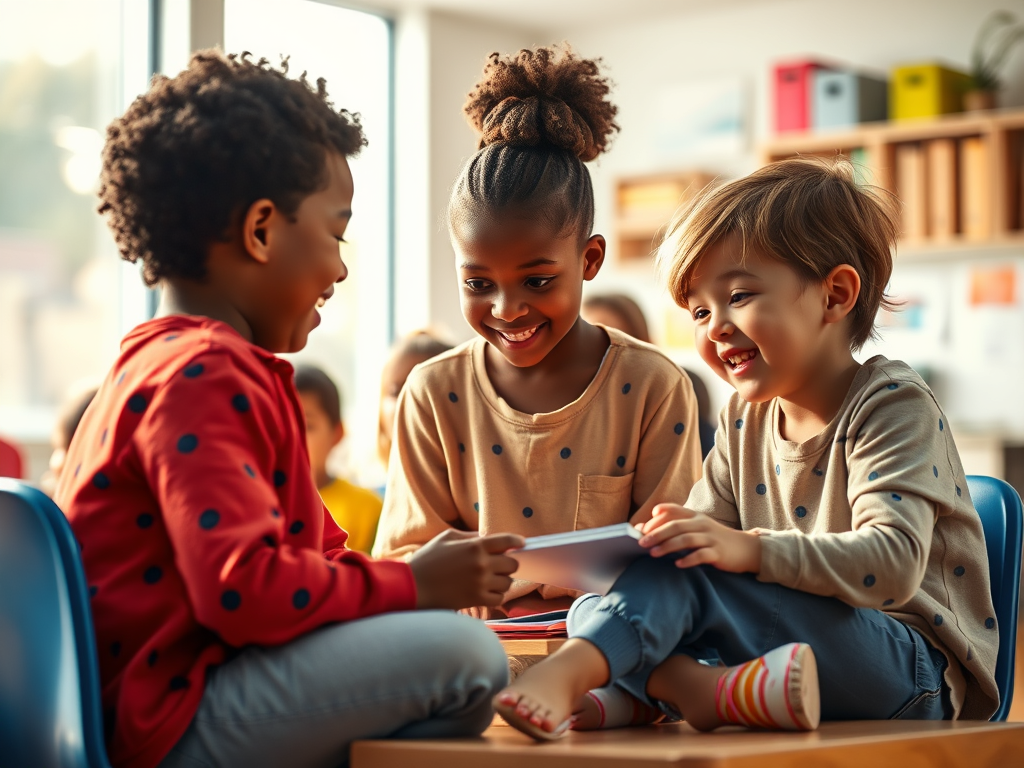
The Lost Art of Parenting: How Failed Parenting is Creating Tomorrow’s Broken Leaders

“Children are the leaders of tomorrow,” widely attributed to Nelson Mandela, is perhaps the first quote children learn in school.
It is therefore essential to shape the future of these children, as they will determine the world’s fate tomorrow.
School plays their role by training their minds, equipping them with the necessary skills required to forge a living, and a degree to commemorate their learning.
But where the failure has become rampant today is not with the schools or the friends they make, but their parents.
Parenting is perhaps the most influential role an individual can undertake in a lifetime.
And the way parents guide, care, provide, teach, and nurture their children has a profound impact not just on their development but on their future as well.
This is a hard look at what happens when parents abandon their roles as first teachers.
A reflection on how failed parenting is creating tomorrow’s broken leaders.
Children are a Reflection of their Parents
What children become later starts with what they absorb early, and the home is where those first patterns are formed and repeated. As Harvard Health notes in its piece on co-regulation, what caregivers model in hard moments becomes part of how children learn to handle life.
Leadership Begins at Home
Children are a reflection of their homes, and when parents step back, society suffers, and the price is often paid in tears and blood.
The first lessons children learn in life are picked from their homes, and like a sponge, they soak in everything.
Parents are like a mirror, and children are a reflection of these mirrors.
Hence, how a parent behaves around their children could culminate in what becomes of the child tomorrow.
Leadership does not begin in boardrooms, government houses, or any other place.
It begins at home.
It starts before a child learns to sit, walk, or talk, and long before the child learns to command influence, make decisions, or take responsibility for others.
It begins with their parents, who teach them values, discipline, empathy, and accountability.
When parents fail in their role as first teachers, leadership suffers, and today, the world is witnessing the consequences of this failure.
The society, instead of producing future leaders, now breeds a generation struggling with responsibility, emotional resilience, and moral clarity.
Parenting, once regarded as a sacred duty, has gradually lost its depth and intentionality.
Many parents now see provision as the entirety of their role, the sum of their duty to their children.
While character formation, guidance, and value transmission are neglected.
This shift has created children who grow into adults without discipline, confidence, and integrity.
It therefore becomes easy to say bad parents produce bad children.
However, that isn’t always the case as there are a few exceptions.
The Outsourcing of Parenting
When parenting is handed off to institutions and screens, children may still grow, but they grow without the steady presence that forms values and emotional steadiness. Harvard Health’s reminder that validation and coping help children through hard emotions points back to something simple: children need involved parents, not distant replacements.
When Parenting Is Handed Off
One of the most damaging trends in modern parenting is outsourcing.
Parents no longer care for this sacred role, or they are just too busy making provisions for their children.
Hence, they now rely heavily on schools, religious institutions, social media, and the internet to raise their children.
Why these institutions play vital roles, it is important to emphasize that they cannot replace the influence of an actively involved parent.
Children are now learning life lessons from screens instead of friendly conversations with their parents.
Children now learn more from social media influencers instead of role models at home.
They even learn more from peers instead of their parents.
The devastating effect of this trend is that children absorb distorted ideas about success, power, leadership, and relationships.
Hence, it becomes unsurprising when many grow up confused, impatient, without morals, and integrity.
It is a result of failed parenting.
As someone once said, there are no bad children, only bad parents.
The Long-Term Effects of Bad Parenting on Children
Bad parenting doesn’t fade with time; it follows children forward, shaping how they cope, connect, and choose. The Center on the Developing Child at Harvard University explains in its overview of early development how early environments become the building blocks for what comes later.
A Child’s Early Experience Leaves a Blueprint
The effect of bad parenting cannot be overstated, as it is profound and multifaceted.
And as research has shown, the role of parents in shaping their child’s future is both lasting and undeniable.
How a parent chooses to raise a child is important as it can be detrimental or favourable to the child.
Either way, the child may suffer lifelong implications, positively or negatively.
Parents aren’t just the first teachers; they are the architects of a child’s early experience and wield immeasurable influence in their children’s development.
This section will explore the lasting impact of bad parenting.
1. Emotional and Psychological Consequences
Emotional and psychological damage is an immediate consequence of bad parenting.
Children who are raised in households where they suffer abuse, are neglected, or often face criticism may have to deal with emotional breakdowns as bad parenting takes its toll on them.
2. Increased Risk of Substance Abuse
Poor parenting contributes to the risk of substance abuse and addiction in children.
When children are allowed to soak in everything they see on the internet, without guidance and emotional support, it can result in drug or alcohol abuse.
3. Bad Social Skills
The home is the child’s first social world, where children get to learn cooperation, empathy, and conflict resolution.
When parents fail to nurture these skills in their young ones, the children may have difficulty making friends and trusting people.
And this can lead to loneliness and social isolation.
4. Mental Health Issues as Adults
The effect of bad parenting can cast a long shadow on children.
Safe to say, the effect of bad parenting goes beyond childhood.
Adults who experienced bad parenting could have a long battle with mental health issues such as depression, anxiety, and complex trauma.
5. Likelihood of Becoming Criminals
Poor parenting is a contributing factor in juvenile delinquency.
Children raised in environments marked by violence, neglect, or exposure to criminal activities are at risk of engaging in criminal behaviors.
Broken Parenting Produces Broken Society
When values are not taught in private, they don’t show up in public, and society pays for what homes neglected. The Center on the Developing Child describes serve and return as a foundational back-and-forth that shapes development, a reminder that what’s missing at home can echo far beyond it.
The Ripple Effect Beyond the Home
The effect of failed parenting does not end at individual households; it has a ripple effect on society.
The society as a whole suffers the consequences of bad parenting, as we can see all around us today.
Leaders who abuse power, citizens without a sense of civic responsibilities, criminals who terrorize our world, injustice everywhere, and a lot more we can’t mention here.
The formative years of a child are the most important stage of his life.
It is the stage where the child learn respect, accountability, honesty, patriotism to their country, and service.
When parents fail at teaching these values, society breeds liars, selfish and corrupt leaders, chaos, moral decay, and a lot more.
Hence, the moral decay, corruption, entitlement, and dishonesty bedeviling our society today are not sudden problems; they are symptoms of long-term parental failures.
Every societal crisis can therefore be traced back to homes where values were neglected or totally ignored.
Restoring the Lost Art of Parenting
Restoring parenting isn’t about flawless execution; it’s about returning to presence, responsibility, and the daily work of love. Harvard Health’s guidance on breaking the negativity loop is another way of saying what this section insists: intention and consistency matter.
Choosing Presence Over Convenience
The solution is not perfection, as imperfection is the hallmark of humanity.
The all-important thing is intention.
Parenting must be reclaimed as an active, deliberate, and important responsibility.
Parenting is a noble cause and parents must understand that raising children is not about convenience but commitment that requires time, presence, correction, guidance, and love.
Children need parents who exemplify the values they teach because they learn more by seeing.
Parents who balance discipline with empathy, freedom guided by boundaries, and love anchored in truth.
Leadership should be taught through everyday action of parents; how they resolve conflict, manage failure, speak to others, and take responsibility.
Parents must choose to raise children with character.
About The Author

Victor Utomi
Victor Utomi is a dedicated school teacher, crypto enthusiast, and nature lover whose curiosity bridges technology and nature. As a former aviation reporter, he has covered global airlines, safety trends, and industry developments with depth and clarity. Known for his sharp storytelling and creative range, Victor has earned a reputation as a true content god—crafting compelling narratives across education, crypto, aviation and nature. He is passionate about simplifying complex ideas and inspiring audiences through thoughtful, well-crafted writing.




reader's monthly pick


subscribe to newsletter
Sign up for The DivsFeed newsletter to get heartwarming stories in your inbox every month.