
David Fajgenbaum And Every Cure’s Mission to Save Lives
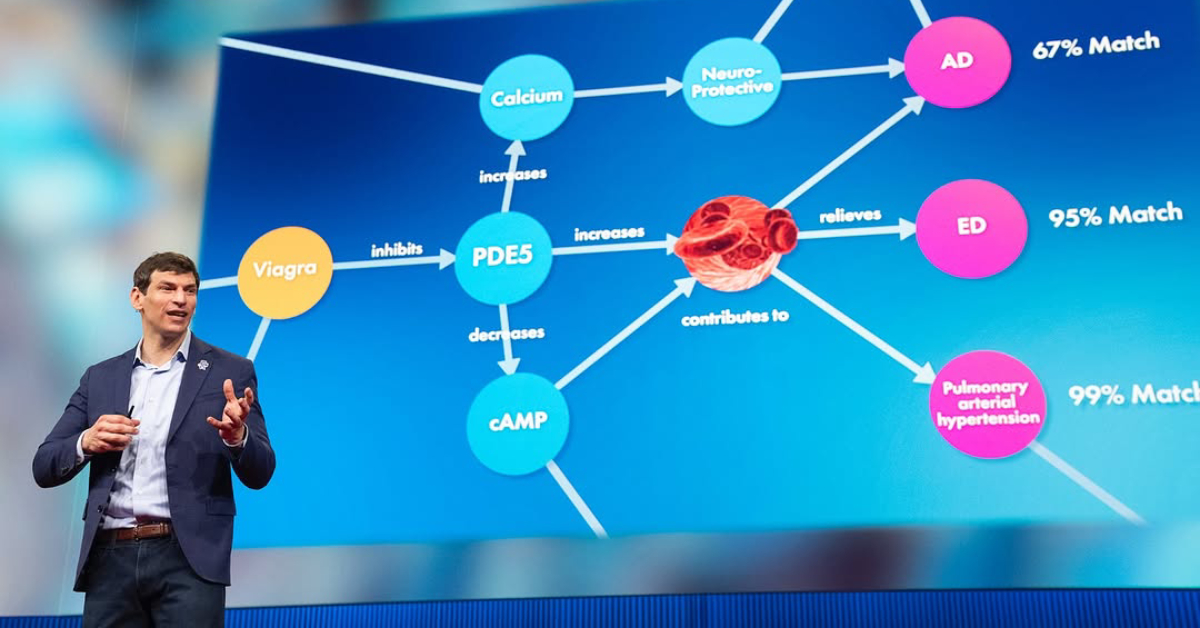
David Fajgenbaum on the TED stage, sharing his Every Cure mission, photo source: David Fajgenbaum
David Fajgenbaum, a young medical student, was in the ICU, and doctors had given up on him. He’d been diagnosed with a rare disease called Castleman’s, with no cure, and was waiting for his last days with no hope. But David beat death with a drug he discovered for himself. That discovery kept him alive and set him on a mission to save many more lives.
Today, David Fajgenbaum is a physician-scientist at the University of Pennsylvania. He has launched eight programs through Every Cure, a nonprofit organization, to repurpose existing drugs and help people with breast cancer, children with autism spectrum disorder, and other serious conditions.
When It All Began
In 2010, David was a medical student, and it all started with feeling extremely tired. He needed multiple cups of coffee and energy drinks just to push through, until the first symptoms appeared as large lumps in his neck. Doctors couldn’t find an early diagnosis and told him only that his organs were failing. After 11 weeks, he was diagnosed with Castleman’s disease, with no cure.
He was in the ICU, unconscious 23 hours a day, as his liver, kidneys, lungs, and most of his organs began shutting down. He noticed blood moles on his chest and shoulders. After chemotherapy, the moles started to shrink.
This observation became an important clue. While studying his own tissue, David discovered that a pathway in his body, known as the mTOR pathway (which helps control how cells grow and use energy), was overactive and caused his immune system to spiral out of control. He analyzed his blood samples, looked at similar diseases, and researched every possible drug that might work. That’s when he found Sirolimus, a medication that inhibits mTOR. His doctor was hesitant at first, since it had never been used for Castleman’s, but they decided to try it. Within days, his symptoms began to improve.
He was able to stay alive because of a drug that was not made for his disease. He discovered a medication that had been used for decades to treat other conditions. Since then, he has been working hard to make sure that no potential cure gets overlooked again.
Repurposing Medicine to Save Lives
He co-founded Every Cure, a nonprofit organization, in 2022. The organization’s mission is to repurpose medicines that have already been used around the world to treat life-threatening diseases with no approved therapies.
At the beginning, the process was fully manual, but they later started using artificial intelligence in collaboration with the Chan Zuckerberg Initiative. This partnership produced an AI platform that examines all drugs and all diseases to identify promising treatments for conditions that might never have been considered.
Thanks to artificial intelligence and machine learning algorithms, Every Cure has been able to discover new uses for existing medicines, such as lidocaine for certain cancers or leucovorin for autism.
How Every Cure Combines AI and Human Expertise
You might think AI does all the work for physicians and scientists in repurposing drugs, but in reality, it takes human intelligence and expert oversight. David illustrated this with an example: one of the top predictions from a machine learning model for Castleman disease was car exhaust fumes! This shows that AI alone cannot be relied on.
It is essential for a medical team to check every AI-generated idea and treatment. That’s why Every Cure is led by experienced doctors, scientists, and clinical researchers who review each prediction to see if it makes sense biologically, can work in real patients, and could actually help people. They use this feedback to improve the AI models.
In the end, AI is most powerful when guided by human experts who can direct it and fact-check its work. Every Cure’s mission to save and improve lives depends on both innovative technology and careful scientific review.
Every Cure’s Mission as a Nonprofit Organization
Every Cure is a nonprofit organization, and all the experts dedicate their time and knowledge as volunteers to save lives.
No one makes a profit from Every Cure’s work. Many of the drugs they repurpose are old or off-patent, like leucovorin, and expanding their use does not benefit pharmaceutical companies, hospitals, or Every Cure itself. That means there is little incentive for awareness campaigns or to educate doctors about their potential.
In today’s system, if a drug is not profitable, there is little motivation to invest in education, awareness, or access. Every Cure advocates for treatments that are effective, educates where no one else will, and ensures that life-saving drugs are not overlooked simply because they do not generate profit.
Guiding Patients with Care and Knowledge
David is spreading awareness among patients with rare diseases that sometimes the best step is to speak to experts who dedicate their lives to understanding diseases and treatments. Local doctors may not always have the answers, but the world’s leading experts could know of a drug, a clinical trial, or a strategy that might save your life.
If you cannot travel, consider emailing the expert or reaching out to the leading disease organization. The important thing is to take action and not sit still.
David Fajgenbaum’s journey reminds us that innovation often comes from looking beyond what is already known, and the mission of Every Cure’s experts can make a real difference.
About The Author

Sahar Fallah
I'm Sahar, a storyteller who values non-generic stories about life, experiences, self-care,
and awareness. Words have a powerful impact, and I’m here to use them to spread
kindness and share stories worth hearing.
I’m proud to be part of DivsFeed, a platform that celebrates real humanity and highlights
stories that might otherwise go unheard.




reader's monthly pick


subscribe to newsletter
Sign up for The DivsFeed newsletter to get heartwarming stories in your inbox every month.