
UN High Seas Treaty Officially Enters Force To Protect Marine Life
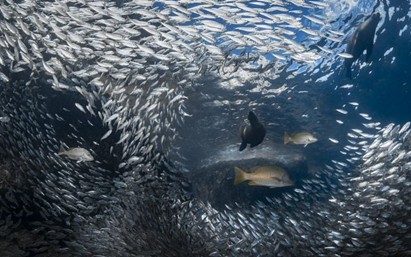
Source: The Nature Conservancy
In March 2023, United Nations member states reached a landmark agreement: the High Seas Treaty, a legally binding accord designed to safeguard marine biodiversity in international waters, with the treaty officially entering force in late 2025 after reaching 60 ratifications.
This treaty covers nearly two-thirds of the ocean that lies beyond national jurisdictions, creating a framework for establishing marine protected areas, limiting deep-sea mining, and enforcing sustainable fishing practices.
According to the BBC, this is the first global pact aimed at protecting ecosystems in the high seas, a region previously vulnerable to exploitation.
Key Provisions & Commitments
As reported by the World Resources Institute, the treaty introduces several critical measures including:
– Marine Protected Areas (MPAs): Countries can designate large zones where industrial activities such as fishing and mining will be restricted.
– Environmental Impact Assessments: Any project in international waters must undergo evaluation to minimize ecological harm.
– Equitable Resource Sharing: A global fund will support developing nations in implementing conservation measures.
These provisions are essential for meeting global biodiversity targets, including the goal of protecting 30% of Earth’s land and sea by 2030.
The ocean plays a vital role in climate regulation, absorbing about 30% of global carbon emissions and supporting fisheries that feed millions worldwide. However, decades of overfishing, pollution, and unregulated industrial activity have put these ecosystems at risk.
Next Steps
While the treaty itself is monumental in the world of ocean protection, its success depends on effective enforcement. Countries must ratify the agreement and implement monitoring systems. Enforcement will rely on advanced technologies such as satellite tracking and AI-driven surveillance to prevent illegal fishing and habitat destruction.
Transparency and funding will be critical, and experts warn that without robust compliance mechanisms, the treaty’s potential could be undermined. Several tech firms have already pledged to provide tools for real-time ocean monitoring, and NGOs are mobilizing citizen science initiatives to keep governments accountable.
Executive Director of Greenpeace International, Mads Christensen, referred to the High Seas Treaty as “a landmark moment” and “proof that countries can come together to protect our blue planet”.
“The era of exploitation and destruction must end. Our oceans can’t wait and neither can we,” he added.
About The Author

Matthew DiGiandomenico
Matt worked for over a decade in the mental health field, committed to helping others through complex challenges. As a writer, he is driven by that same commitment to help others through
writing on topics including mental health and open adoption.
Matt holds a Master’s Degree in Psychology from Fairleigh Dickinson University and an Advanced Professional Writing Certificate from the University of Pennsylvania. He lives in Philadelphia with his husband and 2 young kids.




reader's monthly pick


subscribe to newsletter
Sign up for The DivsFeed newsletter to get heartwarming stories in your inbox every month.