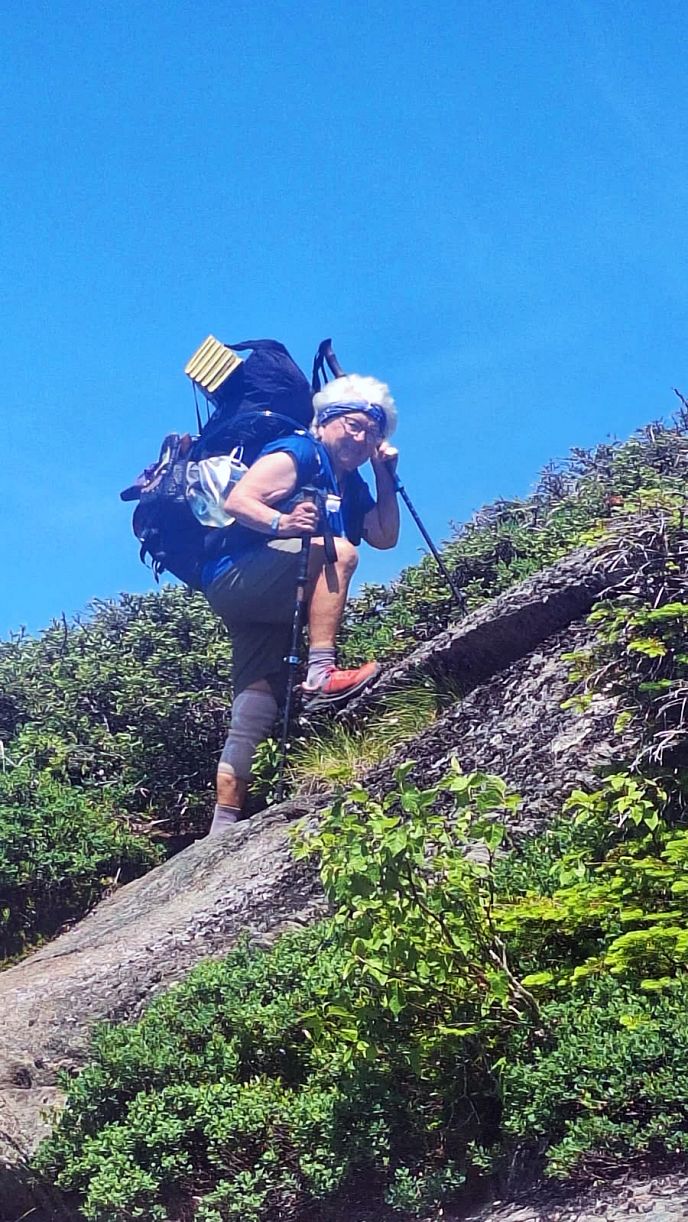
Diane Keaton: A Life of Roles, Style, and Unapologetic Grace

Source: Variety
Born Diane Hall in Los Angeles in 1946, she adopted her mother’s maiden name, Keaton, after discovering Actors’ Equity already had a Diane Hall on file. Nearly eight decades later, Diane Keaton died on October 11, 2025, at the age of 79, leaving behind a cinematic legacy that resists simplification.
Her career, spanning nearly six decades, was an ongoing exploration of what it means to be a woman onscreen, funny, flawed, stylish, and emotionally unguarded. Keaton’s performances were about revealing something about being a woman and being human.
The Films That Made Her
Keaton’s breakout came in 1972 as Kay Adams in Francis Ford Coppola’s “The Godfather,” a role she reprised in Parts II and III. As Michael Corleone’s wife, she embodied the moral cost of proximity to power. Her final scene in Part II, where she’s locked out of Michael’s world, literally and figuratively, remains one of the most devastating moments in American cinema.
But it was “Annie Hall,” in 1977, that made her a cultural phenomenon. Directed by Woody Allen, the film won Keaton an Academy Award for Best Actress and introduced a new kind of romantic heroine: neurotic, stylish, and emotionally transparent. The film’s success turned her menswear-inspired wardrobe into a national obsession, but the real achievement was how she exemplified vulnerability as strength. Her offbeat cadence, hesitant charm, and emotional openness became a blueprint for authenticity.
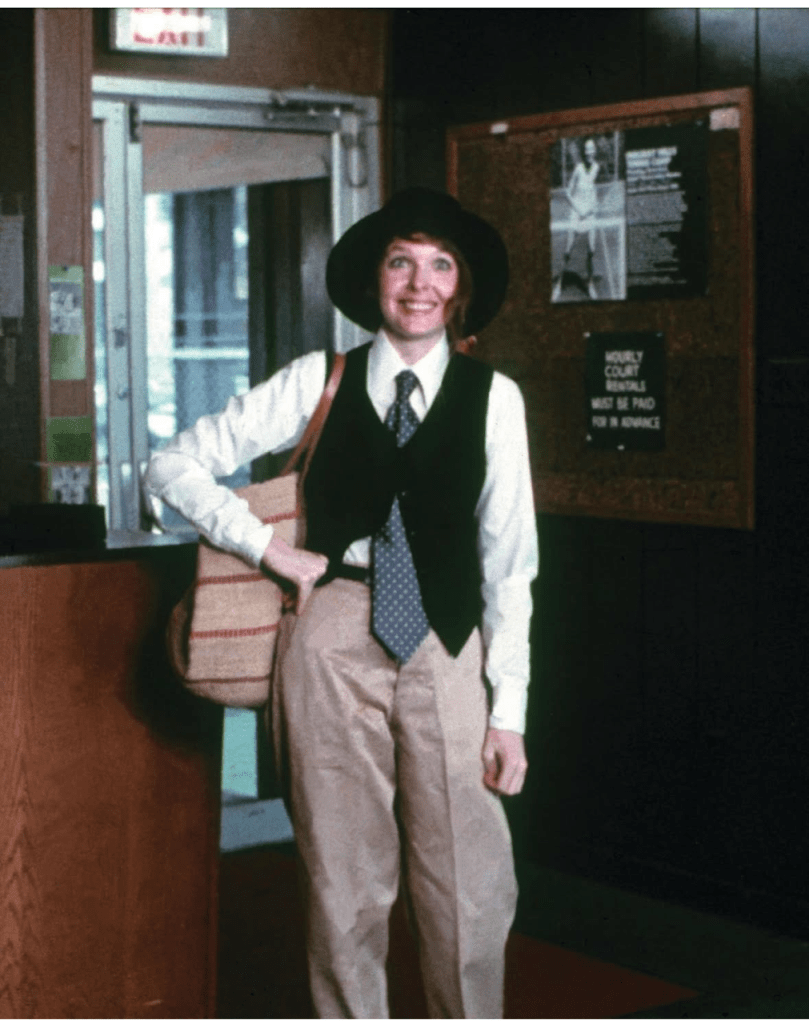
Diane Keaton in “Annie Hall” (1977)
Source: Hollywood Reporter
In “Reds”(1981), Keaton played Louise Bryant, the journalist and activist who chronicled the Russian Revolution. The role earned her another Oscar nomination and showcased her capacity for intellectual intensity. Later, in “Marvin’s Room” (1996), she portrayed a woman caring for her dying father, opposite Meryl Streep. The film was quiet, almost austere, and Keaton’s performance was stripped of vanity.
Her late-career resurgence came with “”Something’s Gotta Give“, in 2003. The movie is a romantic comedy directed by Nancy Meyers. Keaton played Erica Barry, a successful, divorced playwright who unexpectedly falls for her daughter’s older lover, Harry Sanborn, played by Jack Nicholson. The film earned Keaton her fourth Academy Award nomination for Best Actress and proved that romantic complexity doesn’t expire with age.
Keaton later revealed “Something’s Gotta Give” was her favorite film of her career, despite initially thinking it would flop. She cherished the experience of filming a love scene with Nicholson and was deeply moved when he gifted her a portion of his back-end earnings from the film’s gross. The movie’s success, grossing over $266 million worldwide, also helped redefine Hollywood’s portrayal of older women, showing them as desirable, witty, and emotionally layered.
Other notable entries include “Baby Boom” (1987), “Father of the Bride” (1991), “The First Wives Club” (1996), and “Crimes of the Heart” (1986). Each film, in its own way, allowed Keaton to explore the contradictions of womanhood: ambition and tenderness, independence and longing.
And while she’ll be remembered for her hilariously self-deprecating charm, it’s the inimitable goodness at the heart of her characters that will remain with us most. You see it in Annie Hall’s nervous brilliance, in Erica Barry’s late-life vulnerability, and the resilience of Bessie in “Marvin’s Room.”
Keaton never played goodness as virtue; she played it with an insistence on hope even the world was crumbling around these women. Her characters stumble and deflect but never lose their grip on decency.
A New Kind of Female Character
From the 1970s through the early 2000s, a revolution unfolded onscreen, led by women who defied stereotypes. Diane Keaton’s emotionally transparent Annie Hall was only one facet of a broader shift. Jane Fonda’s portrayal of Bree Daniels in “Klute” (1971) offered a sex worker with agency and interiority, a role that earned her an Oscar.
Barbra Streisand, directing and starring in “Yentl” (1983), challenged gender norms and studio gatekeeping, becoming the first woman to write, produce, direct, and star in a major studio film.
Meryl Streep’s “Sophie’s Choice” (1982) and Sissy Spacek’s “Carrie” (1976) brought psychological depth to female characters often reduced to plot devices. Julie Dash’s “Daughters of the Dust” (1991) became the first feature film by an African American woman to receive a U.S. theatrical release, offering a meditation on Black womanhood.
These performances, and directorial visions, broadened the emotional scope of women onscreen, redefining storytelling by placing their complexity at the center and paving the way for other female characters to buck conformity.
Life Beyond the Screen
Keaton never married, a fact she addressed with characteristic candor. “I’m really glad I didn’t get married,” she once said. “I’m an oddball.” In a 2019 interview with People, she reflected, “I think I’m the only one in my generation, and maybe before, who has been a single woman all her life”
She did, however, adopt two children, Dexter and Duke, in 1996 and 2001, and spoke often about the transformative experience of motherhood. “I didn’t think that I was ever going to be prepared to be a mother. Motherhood was not an urge I couldn’t resist. It was more like a thought I’d been thinking for a very long time. So I plunged in,” she told Ladies Home Journal, in 2008, according to People.
Her interests extended beyond acting. She was a passionate advocate for historic preservation and architecture, frequently restoring old homes in Los Angeles. Her coffee-table book House, published in 2012, is a meditation on design and memory, filled with photographs and reflections that reveal her aesthetic sensibility. She also published a memoir, Then Again (2011), which explored her relationship with her mother and the emotional terrain of aging.
Keaton was also vocal about mental health. She spoke openly about her early struggles with bulimia, describing it as a “mental illness” that shaped her time on Broadway. Her willingness to discuss such topics publicly added depth to her public persona, which was often mischaracterized as merely quirky.
Though not overtly political, Keaton supported causes that aligned with her values. She was a longtime advocate for Alzheimer’s research, inspired by her mother’s battle with the disease. She also supported environmental conservation efforts, particularly those focused on California’s natural landscapes. Her philanthropy was quiet, often conducted through donations and private support rather than public campaigns.
Keaton’s commitment to animal welfare was another through line. She worked with organizations like the ASPCA and was known to adopt rescue dogs. Her Instagram feed, which she maintained with surprising regularity, often featured her pets alongside snapshots of her daily life—hats, gloves, and all.
Her Final Act
At the time of her death, Keaton had three unfinished film projects, including a drama with Andy Garcia and a romance with Richard Gere. None had begun filming, and their future remains uncertain.
Tributes poured in from across Hollywood. Bette Midler called her “a complete original” and “a national treasure”. Kimberly Williams-Paisley, who played her daughter in Father of the Bride, wrote, “Working with you will always be one of the highlights of my life.”
Diane Keaton defied the expectations of her industry by reshaping it. In an industry that rewards conformity, she remained singular. She didn’t disappear into characters; she absorbed them into her own unmistakable rhythm. Her body of work reads less like a diary: intimate, idiosyncratic, and wholly her own. She exits the stage as she entered it, unapologetically herself…La dee da, La dee da, La la.
About The Author

Matthew DiGiandomenico
Matt worked for over a decade in the mental health field, committed to helping others through complex challenges. As a writer, he is driven by that same commitment to help others through
writing on topics including mental health and open adoption.
Matt holds a Master’s Degree in Psychology from Fairleigh Dickinson University and an Advanced Professional Writing Certificate from the University of Pennsylvania. He lives in Philadelphia with his husband and 2 young kids.



reader's monthly pick


subscribe to newsletter
Sign up for The DivsFeed newsletter to get heartwarming stories in your inbox every month.