
Compassion That Transforms: Sister Helen’s Story

Source:64Parishes
The death penalty in America seems to follow a certain, in some ways, macabre, emotional logic. Murder is a horrific crime and, to many, it “feels” like justice when the personal responsible receives the “ultimate” punishment.
In fact, just over 50% of Americans are in favor of the death penalty, according to a 2024 Gallup Poll.
But, what happens when that emotion-based logic is confronted with compassion and the possibility for some kind of redemption?
A Prison Pen Pal
In 1981, Sister Helen Prejean, a Catholic nun from Baton Rouge, agreed to write letters to a death row inmate named Elmo Patrick Sonnier as part of her order’s community outreach program. She hadn’t realized this act of compassion would be the beginning of a movement against the death penalty.
What began as spiritual accompaniment evolved into a dogged campaign against capital punishment. Prejean both visited with prisoners and witnessed their executions.
Her first book, Dead Man Walking, published in 1993, chronicled her journey with Sonnier and other condemned men. It became a bestseller, was nominated for a Pulitzer Prize, and was adapted into an Oscar-winning film starring Susan Sarandon and Sean Penn.
Referring to Sarandon’s Oscar-winning performance, Prejean explains, “When you see Susan portraying me going in that prison for the first time with those big wide eyes of hers, it was scary. I had never done anything like that.”
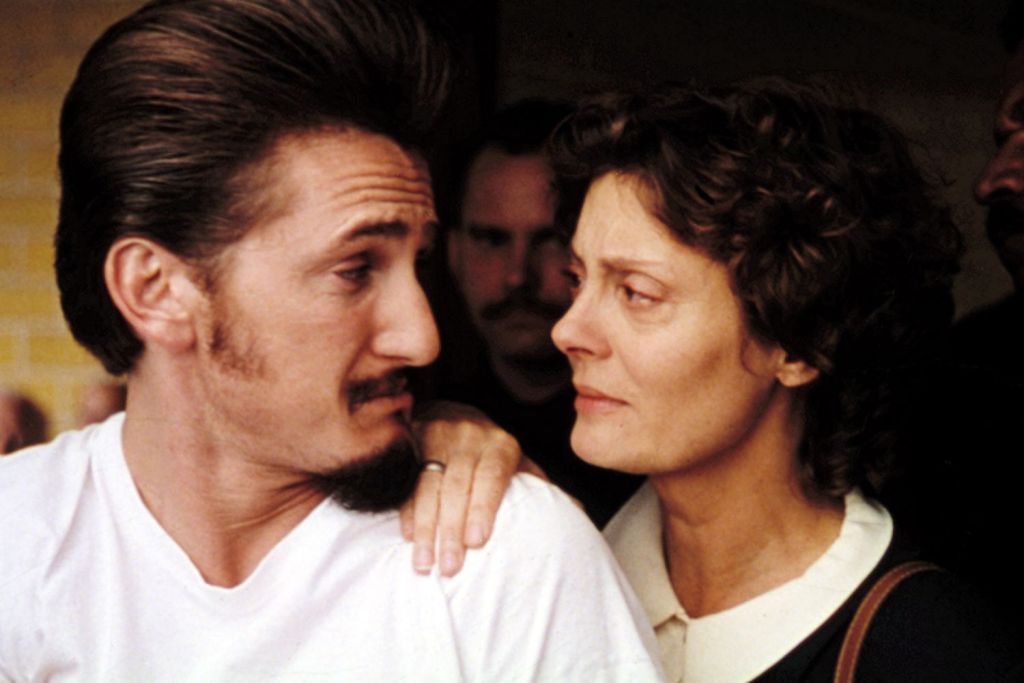
Susan Sarandon (as Sister Helen Prejean) & Sean Penn (as Matthew Poncelet) in 1995’s Dead Man Walking
Source: People
More than its commercial success, the book opened up a moral conversation about the death penalty that had long been considered taboo. Suddenly, this wasn’t only a legal issue, but a human one.
And Sister Helen Prejean was its most compelling messenger.
The Order of Mercy
Prejean joined the Sisters of St. Joseph of Medaille in 1957, a Roman Catholic religious order now part of the Congregation of St. Joseph.
The order’s mission—centered on unity, reconciliation, and justice—became the backbone of her activism. It wasn’t just her faith that propelled her, but her belief that even the most reviled deserve dignity.
She sat with the condemned in their final hours, listened to their stories, and offered the dignity of being seen. In doing so, she exposed the emotional toll of executions, not just on inmates, but on victims’ families, prison staff, and society at large.
The Man Who Changed Her Life
In 1977, Elmo Patrick Sonnier and his brother abducted two teenagers—Loretta Ann Bourque and David LeBlanc—from a “lovers’ lane” in Iberia Parish, Louisiana. Posing as police officers, they sexually assaulted Bourque and then murdered both teens in a remote field.
He was convicted of two counts of first-degree murder and sentenced to death. He was executed by electrocution in 1984 at Louisiana State Penitentiary.
“There are spaces of sorrow only God can touch,” she wrote.
During her visits to the prison, before his execution, Prejean observed Sonnier’s vulnerability and his desire to be seen as more than the sum of his actions. A prison guard even remarked to her that he had “never seen anyone with more remorse than Patrick Sonnier.”
She documented his emotional transformation in Dead Man Walking. She recounts that Sonnier showed deep regret. These accounts may suggest that while Sonnier couldn’t undo the harm he caused, he faced his final days with a seemingly sincere reckoning of his guilt and a longing for redemption.
Shifting the Moral Compass
Before Prejean’s advocacy, the death penalty was largely accepted as a necessary deterrent. After its release, public opinion began to shift. Polls showed growing discomfort with executions, especially in light of wrongful convictions and racial disparities.
Prejean’s advocacy helped illuminate these flaws. She pointed to data from the Death Penalty Information Center showing that, in Louisiana, the odds of receiving a death sentence were 97% higher if the victim was white than if the victim was Black.
Her influence reached the Vatican. After meeting with Prejean, Pope John Paul II called for the abolition of the death penalty during his 1995 visit to the U.S.
In 2018, Pope Francis revised the Catholic catechism to declare the death penalty “inadmissible,” citing its violation of human dignity—a stance Prejean helped shape through decades of activism.
His case became the emotional and moral foundation of Prejean’s belief that those who commit horrific acts are still human. As well as her life-long advocacy against state-sanctioned killing, which, in her view, only compounds the violence.
The National Movement to End the Death Penalty
Over the past several decades, a diverse coalition of legal advocates, faith leaders, civil rights organizations, and grassroots activists has mobilized to challenge the use of capital punishment in the U.S. Their efforts have led to significant legal, cultural, and legislative shifts.
Key milestones and strategies:
Founding of NCADP (1976): The National Coalition to Abolish the Death Penalty was established the same year the Supreme Court reinstated capital punishment. It remains the only fully staffed national organization dedicated solely to abolition.
Legal Advocacy: Groups like the ACLU of Washington helped overturn state death penalty laws, citing racial bias and arbitrary application. In 2018, Washington’s Supreme Court declared its death penalty unconstitutional.
Faith-Based Opposition: Organizations such as the Religious Action Center of Reform Judaism have called the death penalty “a stain upon civilization and our religious conscience,” urging prosecutors to seek alternatives even in high-profile cases.
Grassroots Mobilization: Local groups like the Peace and Justice Action League of Spokane (PJALS) organize vigils, educational events, and legislative campaigns to raise awareness and push for reform.
Global Human Rights Pressure: Amnesty International U.S. opposes the death penalty in all cases, framing it as a violation of human rights and mobilizing international support for abolition.
A Legacy of Mercy
At 86, Sister Helen Prejean is still writing, speaking, and organizing. Her organization, Ministry Against the Death Penalty continues to educate and mobilize communities across the country. She’s witnessed eight executions, testified in high-profile cases, and mentored countless activists.
Her second book, The Death of Innocents, exposed the wrongful executions of two men she had accompanied, highlighting systemic failures in forensic science, legal representation, and prosecutorial conduct. She’s also inspired a generation of lawyers, clergy, and ordinary citizens to rethink what justice looks like.
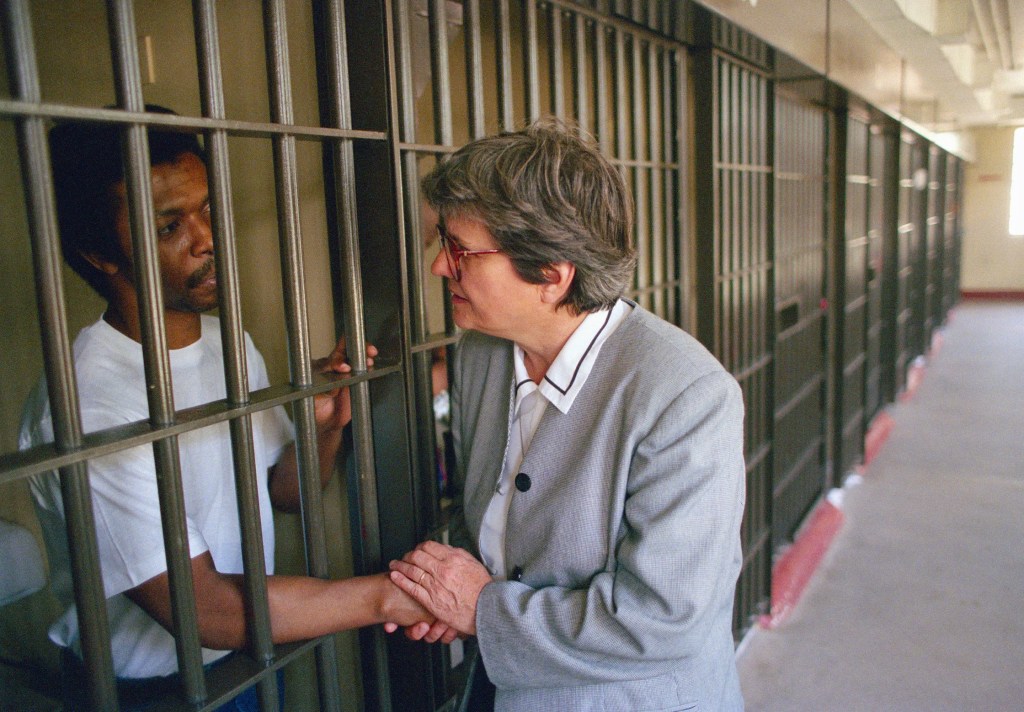
Sister Helen speaking with an inmate.
Source:TheNewYorker
The death penalty is still legal in many U.S. states, but the tide is turning. In recent years, several states have abolished capital punishment, citing moral, fiscal, and legal concerns.
Sister Helen Prejean didn’t abolish the death penalty. But, she changed the way we talk about it.
“I realize that I cannot stand by silently as my government executes its citizens. If I do not speak out and resist, I am an accomplice,” she wrote.
That belief may be her greatest gift of all—a call to see humanity in every soul, no matter how lost.
About The Author

Matthew DiGiandomenico
Matt worked for over a decade in the mental health field, committed to helping others through complex challenges. As a writer, he is driven by that same commitment to help others through
writing on topics including mental health and open adoption.
Matt holds a Master’s Degree in Psychology from Fairleigh Dickinson University and an Advanced Professional Writing Certificate from the University of Pennsylvania. He lives in Philadelphia with his husband and 2 young kids.




reader's monthly pick


subscribe to newsletter
Sign up for The DivsFeed newsletter to get heartwarming stories in your inbox every month.